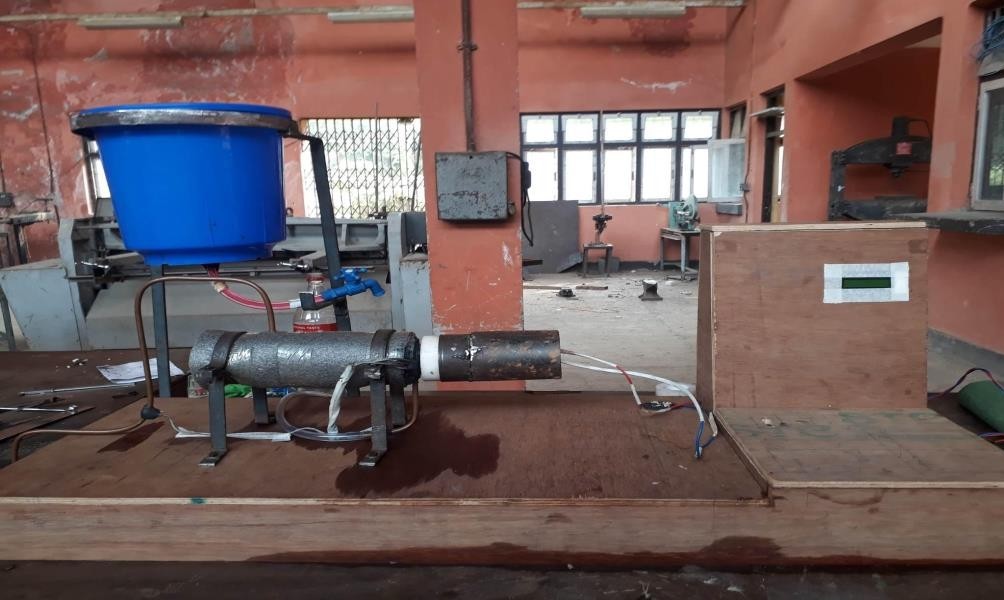
Thermal Conductivity Measuring Apparatus for Steady- State Heat Transfer.
Introduction
This project aims to measure the thermal conductivity of cylindrical metal conductors, particularly rods. Thermal conductivity plays a crucial role in various applications and experiments such as thermal management of electronic devices, design of heat sinks, optimization of energy-efficient buildings, analysis of heat transfer in industrial processes, and material selection for efficient heat dissipation. These applications often involve metals as they are excellent conductors of heat. In order to design and optimize these systems effectively, accurate measurements of thermal conductivity are essential. Hence, the objective of this project is to provide students at Tribhuvan University's Thermal Science Lab with a comprehensive understanding of thermal conductivity and enable them to gain practical knowledge through hands-on experiments by utilizing the device.
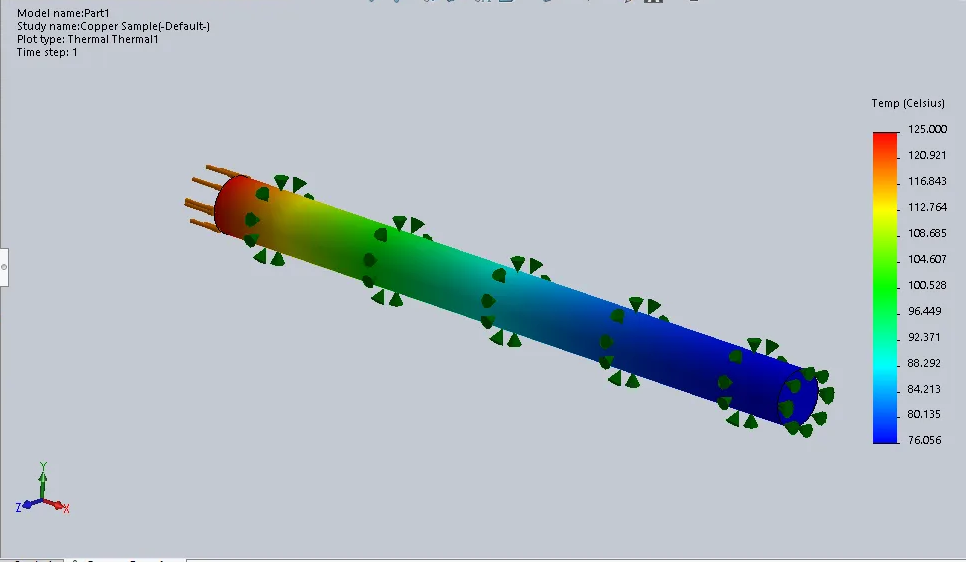
Design and Fabrication
The project was initiated by designing the instrument using SolidWorks software, allowing for precise modelling and visualization. The objective was to create a simple and user-friendly device that students could easily operate and understand. The instrument was built from scratch using readily available materials, making it cost-effective and accessible.
Working Principle
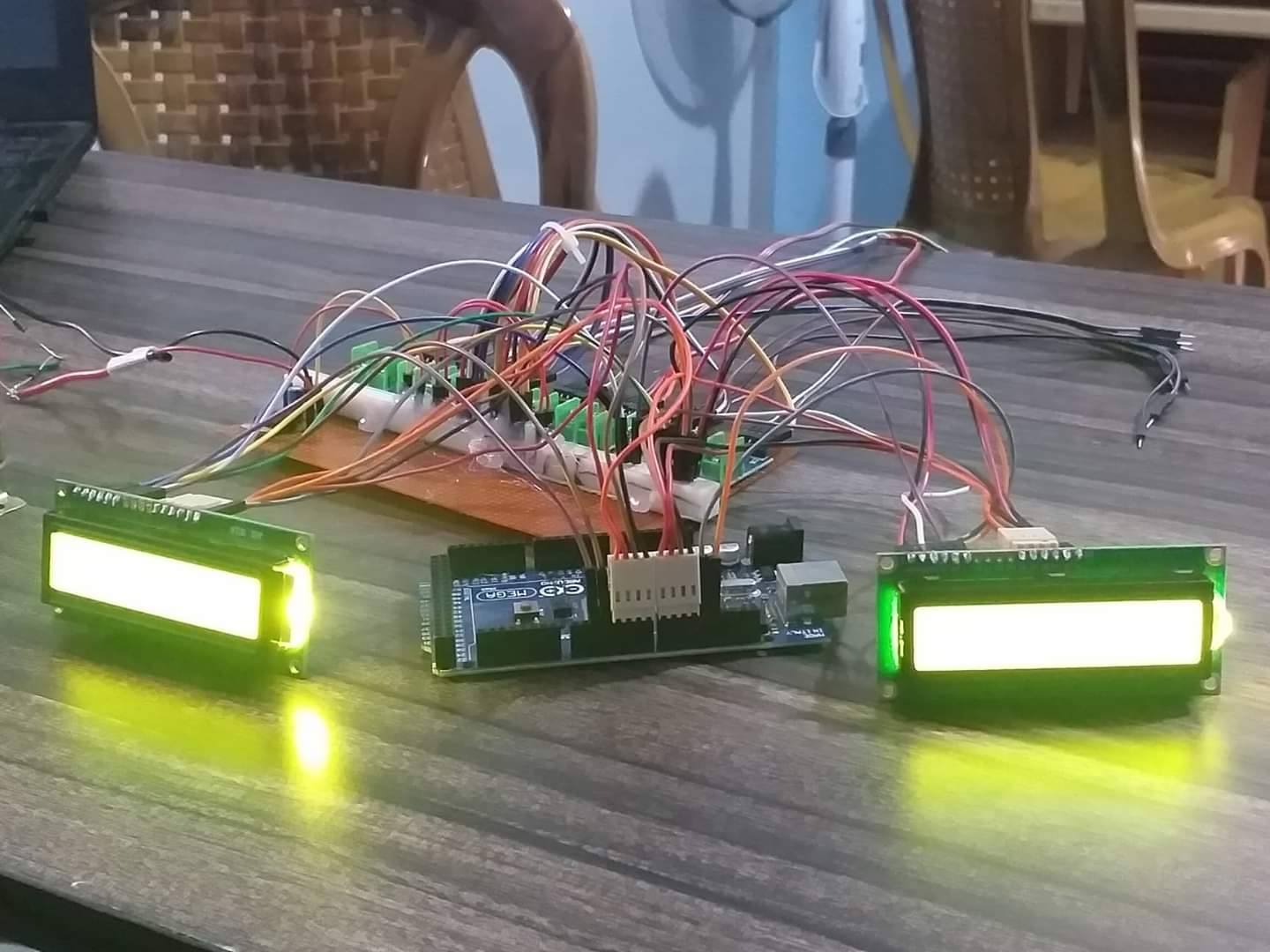
The instrument operates on the principle of Fourier's Law of Heat Conduction, which states that the rate of heat transfer through a material is directly proportional to the temperature difference across it. To measure the thermal conductivity of a metal rod, the instrument employs a steady-state heat transfer method. A nichrome wire serves as the heater, applying heat to one end of the sample rod. Thermocouples are strategically placed at four different positions along the rod to measure the temperature. The measured temperature values are displayed on an LCD screen through the use of an Arduino, an open-source hardware and software platform.